
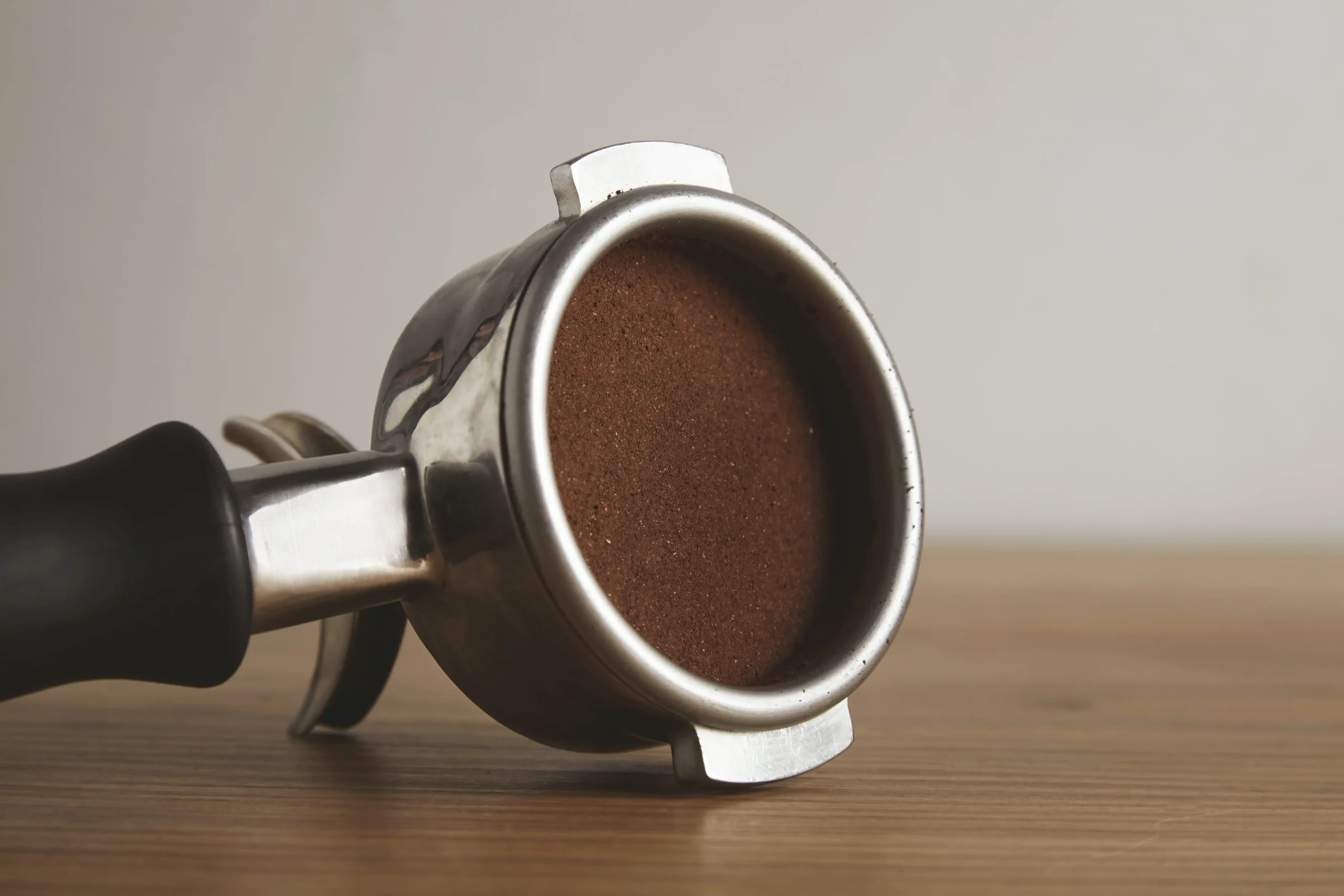
A portafilter is one of the most important components of an espresso machine. Whether you’re new to home espresso or refining professional skills, understanding what a portafilter is and how to choose the right one will dramatically affect extraction quality, workflow, and consistency. From build materials to basket styles and compatibility, every detail plays a role in how your espresso tastes and how easily your machine handles daily use.
A portafilter is the handle and filter assembly that holds the ground coffee during espresso extraction. It locks into the group head of the espresso machine and channels hot pressurized water through the coffee puck.
Its main functions include:
Without the portafilter, an espresso machine simply cannot build the pressure needed to create true espresso. The weight, build quality, and ergonomics of the portafilter also influence how comfortable and repeatable your workflow becomes.
Although they work together, the portafilter and basket are separate components:
Portafilter = outer structure
Basket = inner filter
Different portafilter basket types — such as single, double, ridged, ridgeless, precision, and pressurized baskets — change how the coffee extracts and how forgiving or demanding the espresso-making process is.
Not all portafilters are the same. Choosing the right one depends on your machine, your skill level, and how much control you want over your espresso.
Pressurized portafilters use a double-wall system to artificially generate resistance during extraction.
They’re ideal for beginners because they:
Non-pressurized portafilters (standard commercial style) rely entirely on the grind size, dose, and tamp to build the pressure needed.
They provide:
A spouted portafilter has one or two metal spouts attached to the base.
Its benefits include:
Spouted portafilters are common in cafés because they offer consistency with less mess.
A bottomless portafilter (also known as a naked portafilter) removes the spouts entirely. The basket is exposed, allowing espresso to flow straight downward from the center.
This design provides several advantages:
However, bottomless portafilters are unforgiving: if your distribution or tamping is uneven, it will be obvious, and messy.
A bottomless portafilter is better for learning and refining technique, while a spouted model may be better for everyday convenience.
Choose a bottomless portafilter if you want:
Choose spouted if you prefer reliability, cleaner pours, or split shots regularly.
Portafilter baskets play a crucial role in how espresso extracts. While the portafilter holds the basket, it’s the basket itself that shapes the coffee bed, controls flow resistance, and ultimately influences crema quality, aroma, and shot texture. Understanding the different portafilter basket types helps you choose the right setup for your machine and your brewing style.
Here are the main basket categories and what they’re best suited for:
Single baskets hold a smaller dose (typically 7–10 g) and have a more conical shape.
They are suitable for:
However, they can be harder to dial in consistently due to their narrow shape.
Double baskets are the standard choice for most baristas. They hold 16–20 g of coffee and offer:
Nearly all café-style espresso is brewed using double baskets.
Precision baskets — popularized by competition-level espresso — feature:
They require careful dialing in, but the flavor payoff can be dramatic.
Pressurized (double-wall) baskets artificially build resistance, allowing users to produce crema even with pre-ground coffee or inconsistent grind size.
They are ideal for:
While they simplify extraction, they do not achieve the same depth or clarity as non-pressurized baskets.
Portafilters are not universally interchangeable. Compatibility depends on:
All Quick Mill machines are equipped with 58 mm portafilters, ensuring compatibility with a wide range of baskets and accessories.
However, models with a thermoblock system use a 3-ear portafilter (while maintaining the standard 58 mm diameter). The additional ear is designed to securely lock the portafilter into the group head, providing greater stability and a proper seal during extraction.
Most machines on the market, by contrast, typically use 2-ear portafilters, with only a few specific exceptions. Before buying, always confirm the portafilter fits your exact machine model.
Selecting the right portafilter depends on your goals, machine, and experience level. Here are the key factors to consider:
Always start with the diameter your machine supports.
If you have a 58 mm group head, you’ll enjoy the widest range of basket types and aftermarket accessories.
Think about whether you need:
A good portafilter should feel solid, balanced, and comfortable to grip. Heavy chrome-plated brass models retain heat better and contribute to stable extraction.
Beginners may benefit from pressurized or spouted portafilters, while advanced users often prefer bottomless models for maximum control.