
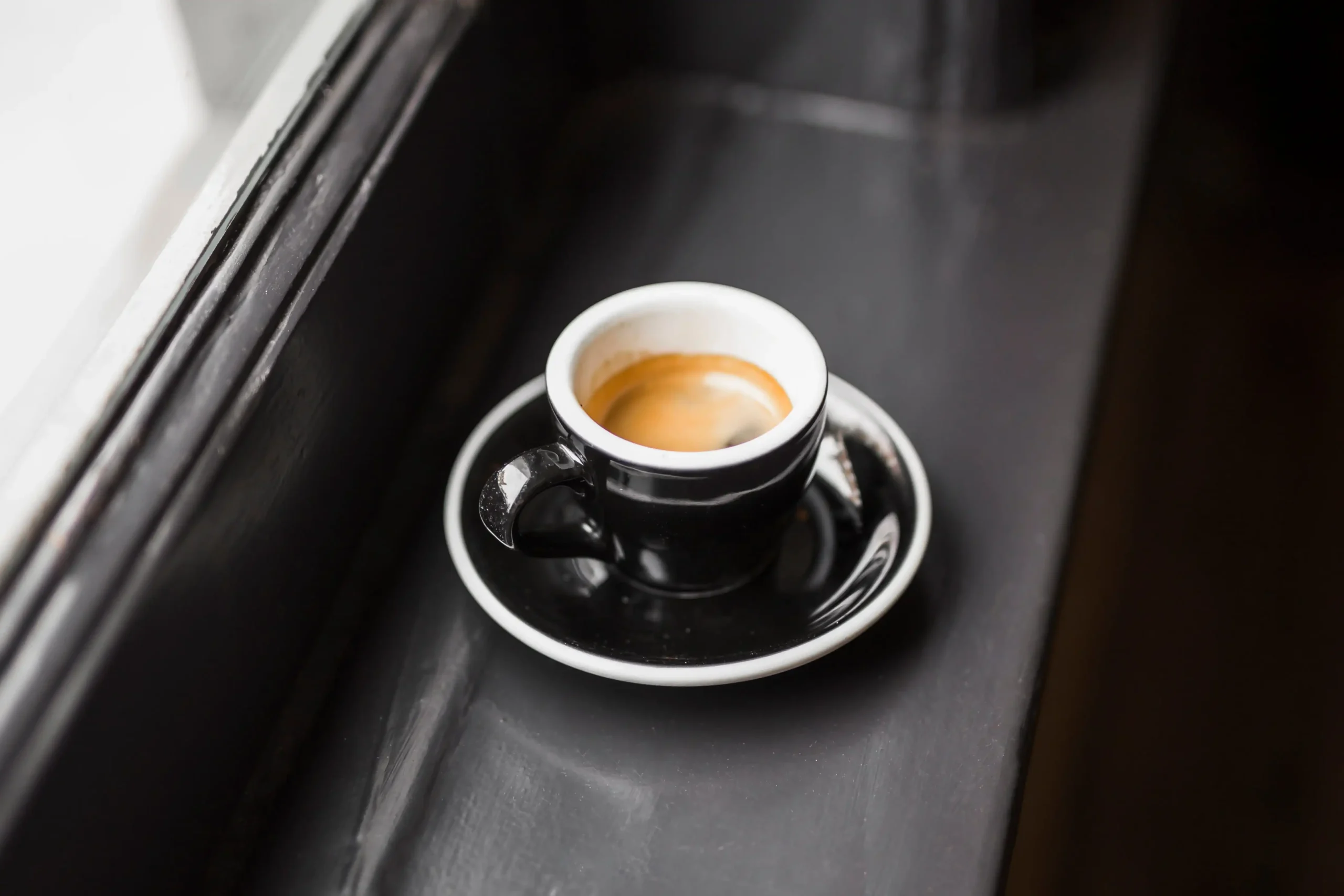
A perfect espresso shot is not just a coffee, it is the highest expression of balance, precision, and control in extraction.
Behind every great shot lies a deep understanding of variables, a consistent method, and the ability to repeat results over time. Mastering espresso means moving from intuition to precision, where every detail contributes to the final cup.
This guide will help you build a professional-level approach to espresso, whether you are a passionate home barista or aiming for café-quality results.
A perfect espresso shot is defined by harmony and clarity. No single element dominates, but all components work together seamlessly.
Key characteristics include:
When extraction is not properly balanced, defects become evident.
An under-extracted shot presents sharp acidity, a weak body, and a short finish.
An over-extracted shot develops harsh bitterness, a dry mouthfeel, and a long but unpleasant aftertaste.
Learning to identify these differences is essential for improving consistency and control.
Great espresso starts with high-quality beans. Even the best technique cannot compensate for poor raw material.
For optimal results, use coffee between 5 and 20 days after roasting, when aromatics are at their peak
Grind size determines how quickly water flows through the coffee bed. A coarse grind leads to a fast flow and weak extraction, while a fine grind slows the flow and can lead to over-extraction. Consistency is just as important as grind size. A high-quality grinder ensures uniform particle distribution and repeatability.
A solid baseline for espresso is 18 grams in and 36 grams out, corresponding to a 1:2 ratio. This ratio provides balance and can be adjusted depending on the coffee and desired profile.
Water composition significantly impacts flavor. Filtered water with balanced mineral content and neutral pH enhances clarity and prevents unwanted taste distortion.
Ideal extraction occurs between 90 and 96°C, or 194 and 205°F. However, stability is more important than the exact value. Fluctuations during extraction can lead to inconsistent results.
Standard espresso extraction occurs around 9 bars. What matters most is the machine’s ability to maintain stable pressure throughout the shot, ensuring even extraction.
A typical espresso shot should extract in 25 to 30 seconds, with a steady and syrupy flow.
Flow rate is a key visual indicator of proper resistance and balance.
A structured workflow transforms espresso from guesswork into precision.
Dialing in is the process of refining variables to achieve the ideal balance. It allows you to adapt to different coffees and conditions while maintaining quality. Grinding finer increases extraction and reduces acidity, while grinding coarser reduces extraction and lowers bitterness. Adjusting the dose changes both strength and resistance, while modifying time fine-tunes the overall balance. The most important rule is to change only one variable at a time. This method ensures clarity and prevents confusion during adjustments.
Even small inconsistencies can significantly affect the result:
Under-extraction results in a sour taste and fast flow, and can be corrected by grinding finer or increasing the dose.
Over-extraction produces bitterness and a dry finish, and can be corrected by grinding coarser or reducing extraction time.
Uneven distribution leads to channeling and imbalance.
Incorrect tamping causes inconsistent resistance.
Machine instability, especially in temperature or pressure, affects extraction quality.
Poor water quality flattens or distorts flavor.
Identifying and correcting these issues quickly improves cup quality.
At a certain level, equipment defines your limits.
To achieve professional results, you need a high-quality espresso machine with strong thermal stability, a precise grinder with flat or conical burrs, a tamper for consistent compression, and a precision scale with a timer.
A thermometer can provide additional control when needed.
Regular maintenance and cleaning are essential to preserve performance and ensure consistent results over time.
Typically between 25 and 30 seconds, depending on the recipe and coffee.
Ristretto is shorter and more concentrated. A normal espresso is balanced. A lungo is longer and more diluted.
No. Crema is only a visual indicator, while flavor balance defines true quality.
Ideally between 5 and 20 days after roasting.
Yes, although consistency and precision will be more limited compared to professional-grade equipment.
Achieving the perfect espresso shot is not about luck, but about control. It requires understanding the variables, applying a method, and using equipment that supports your goals.
When all elements align, espresso becomes more than a beverage. It becomes a precise, repeatable, and deeply personal experience.
If you have already developed solid technique, the next step is to invest in equipment that allows you to fully express the potential of your espresso, ensuring precision, consistency, and professional-level results every single day.