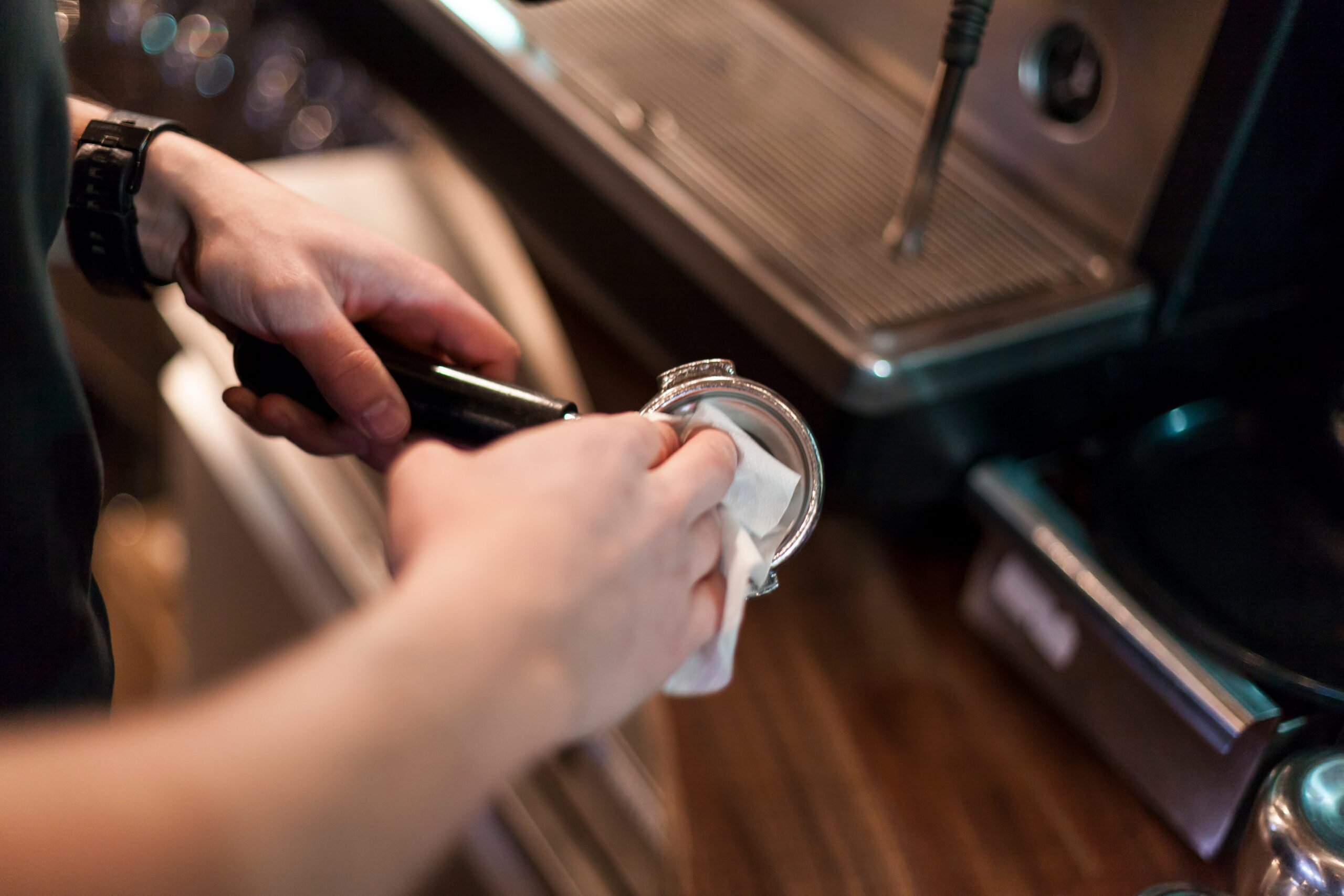
Keeping your espresso machine clean is essential to achieve consistently high-quality coffee, ensure reliable performance, and extend the lifespan of the machine. Coffee oils, fine grounds, limescale, and milk residues build up faster than expected, directly affecting flavor, hygiene, and the long-term reliability of the machine.
Proper cleaning is not just a technical requirement, but an essential practice to preserve extraction quality and ensure correct operation over time. In this guide, you’ll learn how to properly clean an espresso machine, from daily maintenance to deep cleaning and descaling, with guidance suitable for both domestic and commercial machines.
Why cleaning your espresso machine matters
Every espresso extraction leaves behind coffee oils and microscopic particles inside the machine. If not removed regularly, these residues oxidize, alter the aromatic profile, and compromise extraction quality.
A poorly maintained machine leads to:
- Bad Flavor: Bitter, metallic, or sour notes caused by rancid oils.
- Inconsistency: Variations in pressure and temperature between shots.
- Steam Issues: Reduced power due to clogged wand tips.
- Component Failure: Increased wear on gaskets, solenoids, and valves.
Conversely, a clean machine ensures:
- Flavor Clarity: You taste the coffee beans, not the old residue.
- Longevity: Preventing scale buildup extends the machine’s life significantly.
- Hygiene: Prevents bacterial growth, especially in milk systems.
Cleaning vs descaling: what’s the difference?
Cleaning and descaling serve different but complementary purposes.
- Cleaning removes organic residues such as coffee oils and grounds from the brew group, portafilter, and valves.
- Descaling removes limescale, a mineral deposit caused by hard water that accumulates inside boilers and hydraulic circuits.
Cleaning directly affects taste and hygiene.
Descaling protects the machine and helps preserve long-term efficiency.
Both operations are essential and should be performed regularly, depending on usage conditions and water quality.
Daily cleaning routine for your espresso machine
A simple 2-minute routine after your session will prevent 90% of common issues. Here is the essential daily workflow:
- Rinse the group: After pulling your last shot, run water through the group head to flush out loose grounds.
- Clean the portafilter: Rinse the portafilter and filter basket with hot water. Wipe them dry with a clean cloth.
- Purge the steam wand: Purge immediately after frothing and wipe the wand with a damp cloth to prevent milk from baking on.
- Empty the drip tray: Stagnant water breeds bacteria. Empty, rinse, and dry the tray.
- Wipe down: Use a microfiber cloth specifically for stainless steel to remove splashes and fingerprints.
Deep cleaning and backflushing (step-by-step guide)
Deep cleaning removes residues that are not visible but accumulate inside the brew group and valves, affecting extraction quality and machine performance over time.
When to perform deep cleaning
- Domestic machines: every 1–2 weeks, depending on usage
- Commercial machines: at least once a week, or more frequently with high-volume use
What you need
- A blind filter (a basket with no holes).
- Espresso machine detergent (powder or tablets).
- A group head cleaning brush.
The backflushing procedure
- Prep: Remove the standard filter basket and insert the blind filter into your portafilter.
- Dose: Add the recommended amount of detergent (usually 3–5g) into the blind filter.
- Engage: Lock the portafilter into the group head.
- Cycle: Activate the pump for 10 seconds, then turn it off for 10 seconds.
- Repeat: Do this cycle 4–5 times. You will see foam being released into the drip tray.
- Rinse: Remove the portafilter, rinse it thoroughly, and scrub the group head shower screen with the brush.
- Final flush: Lock the portafilter back in (without detergent) and repeat the 10-seconds-on/10-seconds-off cycle 5 times to rinse the internal valves with clean water.
This procedure helps keep the brew group clean and efficient, preserving extraction quality and machine reliability over time.
How to descale an espresso machine
Limescale is the silent killer of espresso machines. It accumulates on heating elements and sensors, leading to temperature instability and blockages.
When to descale
Descaling frequency depends mainly on water hardness and usage intensity. Over time, limescale buildup can compromise internal components and performance stability.
Common signs include:
- Unusual noises during operation
Indicative intervals:
- Soft water: every 6–12 months
- Hard water: every 2–3 months
To reduce limescale formation and protect the machine over time, Quick Mill recommends using water with a hardness between 80 and 120 ppm, which provides the ideal balance between component protection and extraction quality.
General Descaling Procedure
Descaling is a delicate operation involving internal circuits and key components. For this reason, Quick Mill recommends having descaling performed by its authorized service centers, ensuring correct and safe execution in accordance with technical specifications.
For informational purposes, a general descaling procedure includes:
- Preparing the descaling solution according to product instructions
- Filling the water tank with the solution
- Allowing the solution to flow through the brew group and steam circuit
- Observing the recommended contact time
- Thoroughly rinsing with clean water (at least two full tanks)
Use only espresso machine–specific descaling products. Vinegar or unsuitable substances are not recommended and may damage internal components.
Milk residues can spoil quickly and block the tiny holes of the steam tip.
- Daily: Always purge before and after frothing. Wipe with a damp cloth immediately.
- Weekly (deep clean): If you notice reduced steam power, the tip may be clogged.
- Mix a milk system cleaner with water in a pitcher.
- Submerge the wand and open the steam valve for a few seconds.
- Let it soak for 10–15 minutes.
- Rinse and purge thoroughly.
Cleaning tips for home, automatic, and commercial machines
Prosumer & dual boiler coffee machines
- Perform regular backflushing
- Pay close attention to daily steam wand cleaning
- Check brew group gaskets and replace them when wear is detected
Superautomatic coffee machines
- Always use integrated cleaning and rinsing programs
- Clean the brew unit and milk frother regularly, if present
- Frequently empty and clean internal waste and drip containers
- Inspect gaskets and replace them in case of wear or loss of sealing
Commercial coffee machines
- Follow a structured daily cleaning routine
- Pay particular attention to steam wand cleaning for hygiene and performance
- Schedule descaling through authorized service centers
- Regularly inspect gaskets and wear components, intervening as needed based on workload
Essential cleaning tools and products
To clean like a pro, you need the right toolkit. Avoid generic household cleaners.
- Group head brush: Stiff bristles to scrub the shower screen and gasket.
- Blind filter: Essential for backflushing.
- Espresso detergent: Specialized powder (like Puly Caff or Cafiza) that dissolves oils without leaving a soapy taste.
- Microfiber cloths: Keep one for milk (damp) and one for surfaces (dry).
- Spare gaskets: Always keep a spare group gasket on hand.
Pro tip: Quick Mill recommends purchasing products and spare parts exclusively from authorized dealers. This ensures compatibility and prevents damage to sensitive internal materials.
Common cleaning mistakes to avoid
- Using vinegar: Never use vinegar to descale. It is too harsh for rubber seals and leaves a lingering smell that ruins coffee flavor for weeks.
- Neglecting backflushing: Skipping this leads to a stuck 3-way solenoid valve.
- Forgetting the water tank: Algae can grow in the water tank. Wash it with soap and water weekly.
- Using abrasive sponges: These scratch the stainless steel finish. Use microfiber only.
FAQ about espresso machine cleaning
How often should you backflush an espresso machine?
For home use (2-4 shots a day), backflush with detergent once a week. Perform a water-only backflush after every heavy session. Commercial machines must be backflushed daily.
Can you use vinegar to descale the espresso machine?
No. Vinegar is not recommended. It is corrosive to internal gaskets and leaves a persistent odor/taste that is very difficult to rinse out. Always use a dedicated descaling solution suitable for espresso machines.
What’s the safest way to clean a steam wand?
The safest way is prevention: purge and wipe immediately after every use. For buildup, soak the wand in a dedicated milk cleaning solution. Do not scrape the wand with knives or metal wool.
Should you clean before or after every shot?
You should perform a “flush” (running water) before the shot to heat the group, and a flush and wipe after the shot to remove grounds.
What’s the best cleaning routine for home vs commercial users?
Home users should focus on a weekly deep clean (backflush) and managing water hardness. Commercial users need a rigorous daily shutdown routine involving chemical backflushing and soaking portafilters to comply with hygiene standards and maintain high volume consistency.