
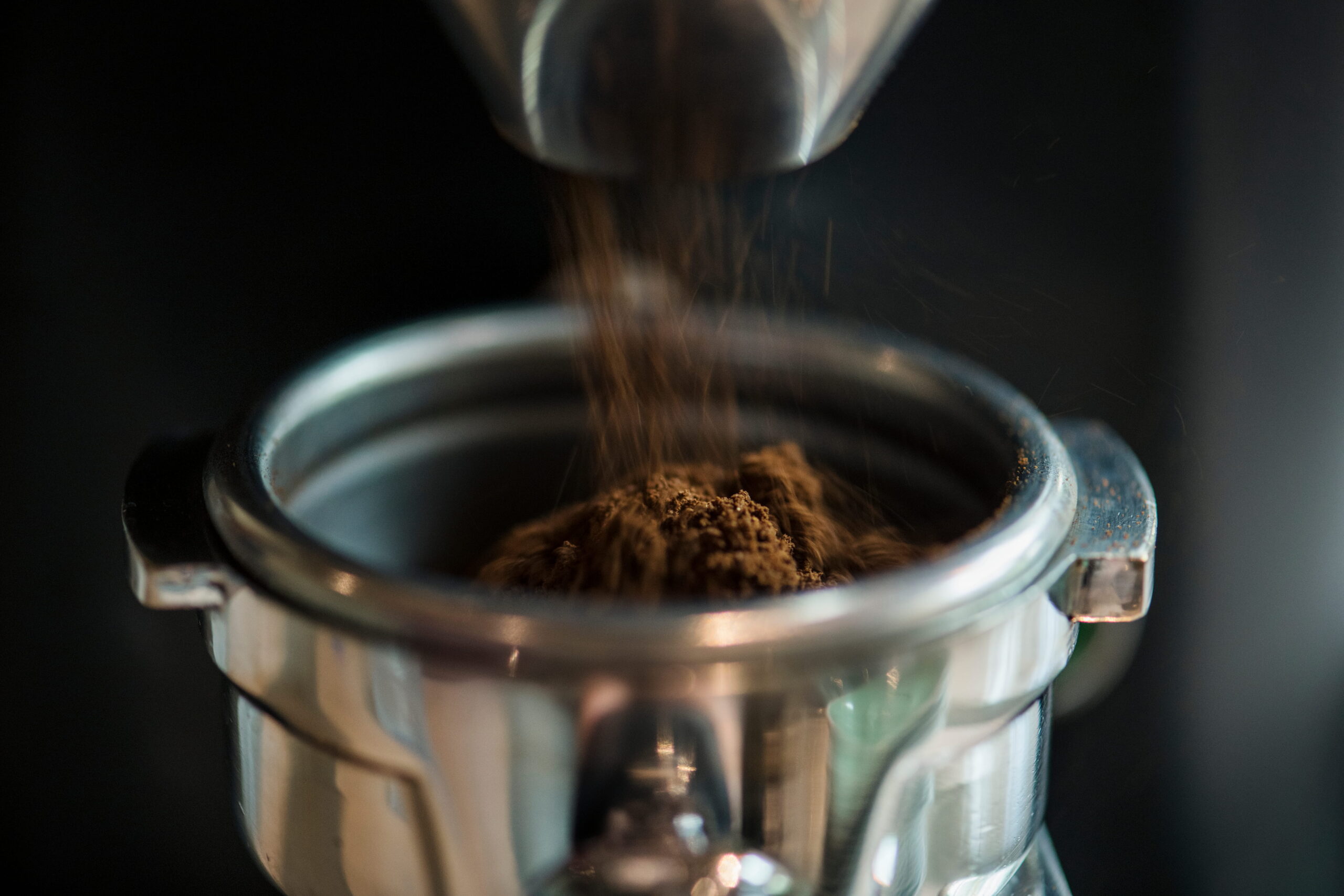
Grinding your beans correctly is one of the most crucial steps in brewing a great espresso. The way you grind coffee for espresso affects how water flows through the coffee, how quickly flavors are extracted, and ultimately whether your shot is balanced or bitter, weak or sour. For espresso lovers and home baristas who want café-style results, mastering the grind is essential. Quick Mill has been crafting Italian-made espresso machines and grinders since 1945, combining time-honored technique with modern precision and understanding how to grind beans for espresso is key to unlocking what these machines can do.
To grind coffee for espresso with consistency, a burr grinder is essential. Burr grinders crush beans evenly between two burrs, either conical or flat, producing uniform particles that allow water to flow evenly through the puck. This uniformity directly affects extraction: even particles produce a balanced espresso, while mixed sizes cause over- and under-extraction at the same time.
The best grinders for espresso have:
High-quality espresso grinders offer the fine control needed to dial in the sweetness, clarity, and body of your espresso shot. Blade grinders, in contrast, create chaotic particle sizes and should never be used for espresso.
Before diving into the technical steps, it’s important to understand that espresso grinding is part science, part craft. Grind size, dose, yield, and tamping all work together, and small adjustments can transform the cup. This step-by-step process helps you learn how to grind beans for espresso with confidence and consistency.
The quality of your grind starts with your beans. For espresso, look for:
Fresh beans release gases and oils that interact with water pressure, helping build crema and deep flavor. Older or pre-ground coffee loses these volatile compounds, resulting in thin, flat espresso.
The grind size is arguably the most important variable in espresso preparation. It controls how water travels through the puck, affecting extraction time, flavor, aroma, body, and crema.
Different brewing methods require different grinds. Here’s where espresso falls:
Espresso grind is just slightly coarser than Turkish coffee and much finer than drip coffee.
A correct espresso grind should result in:
If shots run shorter or longer than expected, your grind is the first thing to adjust.
A classic starting point for grinding beans for espresso is:
This recipe is reliable because it follows the extraction principles used by professional baristas.
The 2.1 rule suggests using a 1:2.1 brew ratio — for every gram of dry coffee, extract about 2.1 grams of liquid espresso.
Example:
This slightly longer ratio enhances sweetness and clarity while preserving body.
Tamping compresses the fine espresso grounds into an even, compact puck.
Correct tamping ensures:
Key points:
Your grind size and tamping technique must work together. Even perfect tamping won’t fix a bad grind.
Shot time is your diagnostic tool. It tells you whether your grind size is correct.
Shoot for a consistent 25–30 second extraction from first drip to final drop. Adjust the grinder in tiny increments until flavor and timing align. With practice, you’ll learn how grind adjustments affect flow and taste.
Mastering espresso begins with understanding how easy it is to go wrong when grinding coffee. Even tiny mistakes in grind size, tamping, or bean selection can dramatically change the extraction. What looks like a simple step — grinding beans for espresso — is actually one of the most sensitive parts of the entire brewing process. Knowing the most common pitfalls gives you the clarity to diagnose issues faster and produce more consistent, better-tasting shots.
One of the biggest mistakes beginners make is using a blade grinder instead of a burr grinder. Blade grinders chop beans unevenly, producing a chaotic mix of fine dust and large chunks. This inconsistency leads to an extraction that is both over- and under-extracted at the same time.
The result?
A burr grinder’s uniformity is non-negotiable for proper espresso.
Another common issue is adjusting the grind size in large steps. Espresso is extremely sensitive; a tiny shift in grind size can completely change the shot. When people move too drastically, for example, several clicks finer or coarser — they end up chasing their tail: one shot is too bitter, the next is too sour, and they never find stability.
The golden rule:
Make micro-adjustments and taste each change.
Even the best grinder can’t compensate for old coffee beans. As beans age, they lose oils and aromatics, and their internal structure changes. This affects both the way they grind and the way they extract.
Old beans tend to:
Always aim to use beans within 2–4 weeks of roasting and expect to adjust your grinder slightly as the beans age.
Many people tamp immediately after grinding, assuming the grounds naturally fall into the portafilter evenly. In reality, coffee often clumps or forms uneven mounds, creating weak points that can lead to channeling, a problem where water finds shortcuts through the puck instead of flowing evenly.
To avoid this:
Proper distribution is essential for consistent extraction.
Some beginners try to slow down a fast shot by tamping harder. But tamping has only one job:
to compress the grounds evenly, not to control flow rate.
If your espresso is running too fast, tamping harder won’t fix it, you need to grind finer.
Trying to use tamp pressure as a correction tool leads to uneven shots and inconsistent results.
Coffee grinders naturally accumulate oils, micro-particles, and residue inside the burr chamber and chute. Over time, these old compounds mix with fresh grounds, creating off-flavors and reducing grind consistency.
Signs your grinder needs cleaning:
A clean grinder ensures repeatability, clarity, and a truer representation of the beans.
Either can work, but:
Light roasts are more complex but harder to dial in, while dark roasts produce classic Italian espresso notes.
Espresso grind should be very fine, slightly coarser than Turkish coffee and similar to fine table salt. If your shot tastes sour, go finer; if it tastes bitter or the flow is too slow, go coarser
Regular ground coffee, typically sold for drip machines, is far too coarse for espresso. Using it will result in watery, under-extracted, sour shots with almost no crema.
The “30-second rule” suggests espresso should extract in roughly 25–30 seconds.
It’s a guideline, not a strict law. The right extraction time depends on:
The goal is balanced flavor, not strict timing.